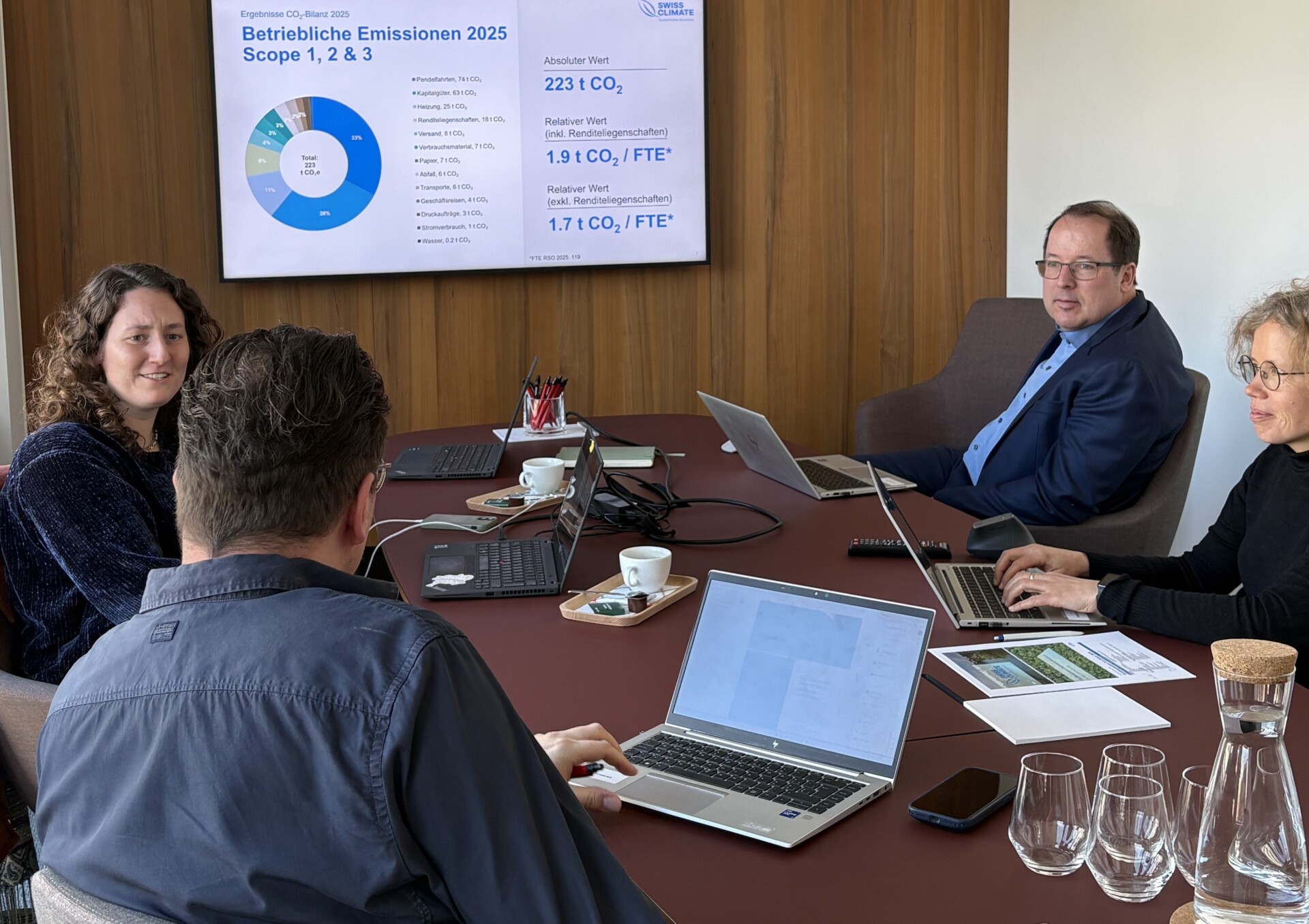
Managing sustainability in a structured way: An interview with Albert Thommen, Head of Services at Regiobank Solothurn AG
How can a regionally anchored bank not only communicate sustainability, but manage it in a substantiated and effective way? Regiobank Solothurn AG has addressed this question by systematically recording its CO₂ emissions and further developing its climate management approach. In this interview, Albert Thommen, Head of Services, shares insights into the motivations, key challenges, and lessons learned throughout this process.
What initially motivated Regiobank to engage more intensively with CO₂ management and to establish a carbon footprint?
The trigger was our ambition to manage sustainability in a well-founded and transparent way. As a regionally anchored bank, we wanted to create greater transparency and underpin the statements in our sustainability report with robust data. The carbon footprint helps us systematically capture emissions, make developments measurable, and identify key areas for action with the greatest impact. This provides the foundation for concrete and effective reduction measures.
What specific challenges did you overcome in this process—whether methodological, organizational, or cultural?
The main challenge was the data situation: information was scattered and had to be consolidated. In addition, it was important to clearly define system boundaries and key assumptions, as well as to establish clear responsibilities. Another priority was to design data collection in a pragmatic and practical way for day-to-day operations. From a cultural perspective, the focus was on embedding a mindset of continuous improvement—rather than expecting perfection in the first year.
In what ways was Swiss Climate able to support you?
Swiss Climate supported us throughout the entire process with a structured approach—from defining the scope and collecting and validating data to preparing the results in a clear and understandable way. We also benefited from their experience from other projects and received valuable input for further developing our CO₂ management.
Looking back on the journey so far: what has changed—whether in thinking, in actions, or even in Regiobank’s self-image?
In retrospect, our approach to sustainability has become noticeably more professional: today, we work in a more data-driven way, with clearer responsibilities and a stronger level of accountability. The carbon footprint creates transparency and a shared basis for decision-making. It also reinforces our commitment to continuously develop this topic further.
What developments do you foresee in the financial sector, and how do they impact Regiobank’s sustainability efforts?
We are advancing sustainability primarily out of conviction and a sense of responsibility—not because we are required to do so. At the same time, we expect further regulatory requirements in the financial sector, even though it is not yet fully clear to what extent these will apply to regional banks. Therefore, we are gradually expanding our foundations and processes step by step to remain capable of acting and credible.
back