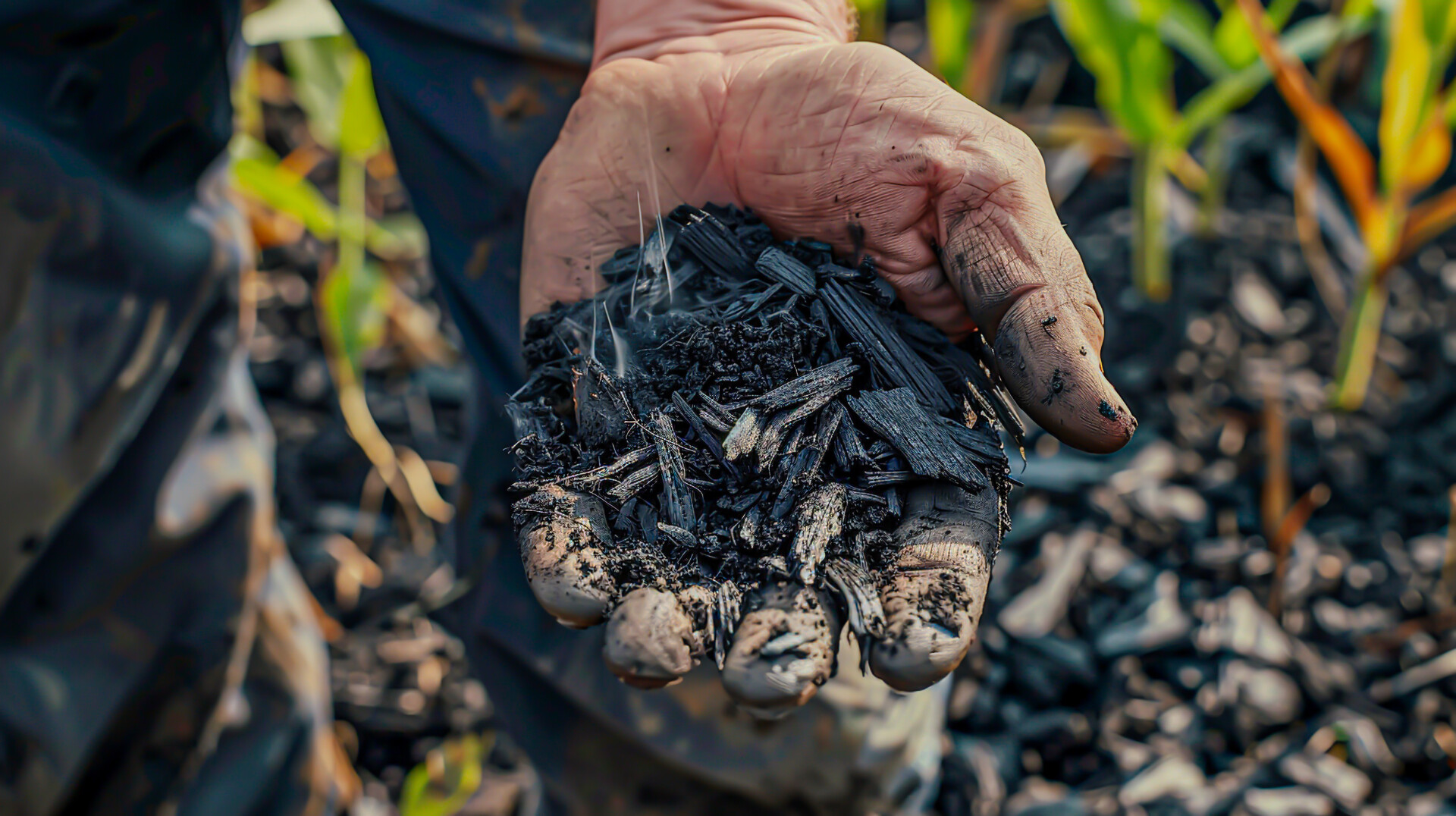
CDR Becomes a Management Issue: Why Companies Should Take a Position Now
Just a few years ago, Carbon Dioxide Removal (CDR) was often discussed as a niche topic. The debate focused primarily on technologies, costs and the question of whether CO₂ removal was necessary or even feasible. In 2026, the situation looks different. The new WWF guide and the Science Based Targets initiative (SBTi) Corporate Net-Zero Standard send a common message: CDR is becoming an integral part of credible net-zero strategies. The fundamental principle remains unchanged: CDR does not replace decarbonisation. But achieving net zero will be difficult without CDR.
The Debate Has Shifted
The State of Carbon Dioxide Removal report clearly shows that CDR now plays a necessary role in virtually all 1.5°C and net-zero scenarios. The key question is therefore no longer whether we need to remove CO₂ from the atmosphere, but whether we can build the necessary capacity in time. The figures are striking:
- Around 1.2 gigatonnes of CDR will be required globally by 2035.
- By 2050, demand is expected to rise to around 5.2 gigatonnes.
- At the same time, around 99.9% of CO₂ removals achieved today come from nature-based approaches.
- Durable technological solutions currently account for only a very small share.
The bottleneck is increasingly no longer technology, but demand, financing, infrastructure and the policy framework. This is precisely why the years 2026 to 2030 are considered a critical window for market development.
The New WWF Compass Provides Guidance
What we find particularly compelling about the WWF Compass is that it avoids simplistic black-and-white answers. Rather than asking whether companies should use CDR or not, the guide addresses the more important question: For what purpose?
WWF distinguishes between three roles for CDR: neutralising residual emissions in the target year, taking on additional responsibility before reaching net zero, and contributing to FLAG target achievement in the land sector. Depending on the objective, different technologies and quality requirements may be appropriate. This moves the debate away from the assumption that every tonne of CO₂ removed should be treated equally.
SBTi Is Giving CDR a Clearer Role
What is particularly interesting is that this thinking is increasingly reflected in the further development of the SBTi Net-Zero Standard. The new version of the standard shifts the focus beyond target-setting towards implementation. Companies are expected to use all available levers to reduce emissions, report transparently on progress and continuously develop their climate strategies. At the same time, it is becoming increasingly clear what role CDR will play in the long term:
- Remaining residual emissions must ultimately be neutralised at the end of the net-zero pathway.
- Companies will increasingly need to address their responsibility for ongoing emissions.
- Durable carbon dioxide removal is evolving from a niche topic into a strategic component of net zero.
For companies, this means one thing above all: CDR is moving from a voluntary topic for the future to a management issue today.
What Does This Mean for Companies in Practice?
Companies do not need to procure large volumes of CDR today. However, they should already understand what their future needs might look like — because high-quality CDR solutions will not be available in unlimited quantities. Companies should:
- understand their long-term residual emissions;
- be familiar with best-practice requirements and frameworks such as those of WWF and SBTi, as well as regulatory requirements governing the eligibility and recognition of CDR;
- monitor relevant technologies;
- and develop a position on the role CDR should play in their climate strategy.
This is precisely where the most significant developments are currently taking place.
Conclusion
The new WWF Compass comes at the right time. While the State of CDR report highlights the enormous scaling gap, WWF provides guidance on how companies can strategically integrate CDR. At the same time, SBTi is further developing its standard and establishing clearer expectations around residual emissions and carbon dioxide removal. The key takeaway is surprisingly simple:
The question today is no longer whether companies will need CDR — but what role it should play in their future net-zero strategy.
back